
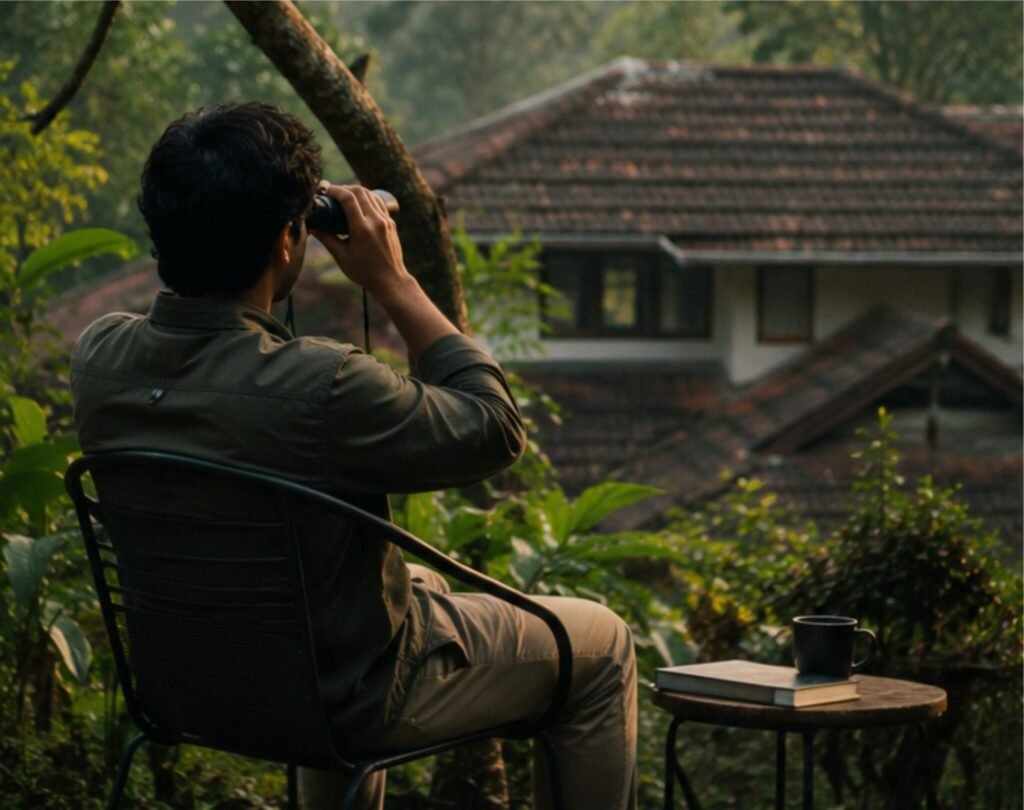
Some landscapes announce their importance loudly through size, designation, or spectacle. Villa Katipadu does none of these. And yet, it matters deeply.
Villa Katipadu represents a category of habitat that is increasingly rare and increasingly essential: the everyday ecological space where life continues without formal protection, but with remarkable resilience.
What makes Villa Katipadu significant is not rarity, but continuity. Birds are not seasonal attractions here. They are daily presences. This constancy allows for long-term observation of habits, changes, and subtle responses to environmental shifts.
Such places offer insights that short visits to protected areas cannot. They show how birds adapt, how populations fluctuate quietly, and how ecosystems persist outside conservation headlines.
For students of ornithology, amateur birders, and nature observers, Villa Katipadu functions as a living classroom. It teaches patience rather than performance. Lessons emerge slowly through repeated walks, missed sightings, and gradual familiarity.
One begins to recognize not just species, but individuals. Territories become legible. Absence becomes meaningful. These are the foundations of true ecological understanding.
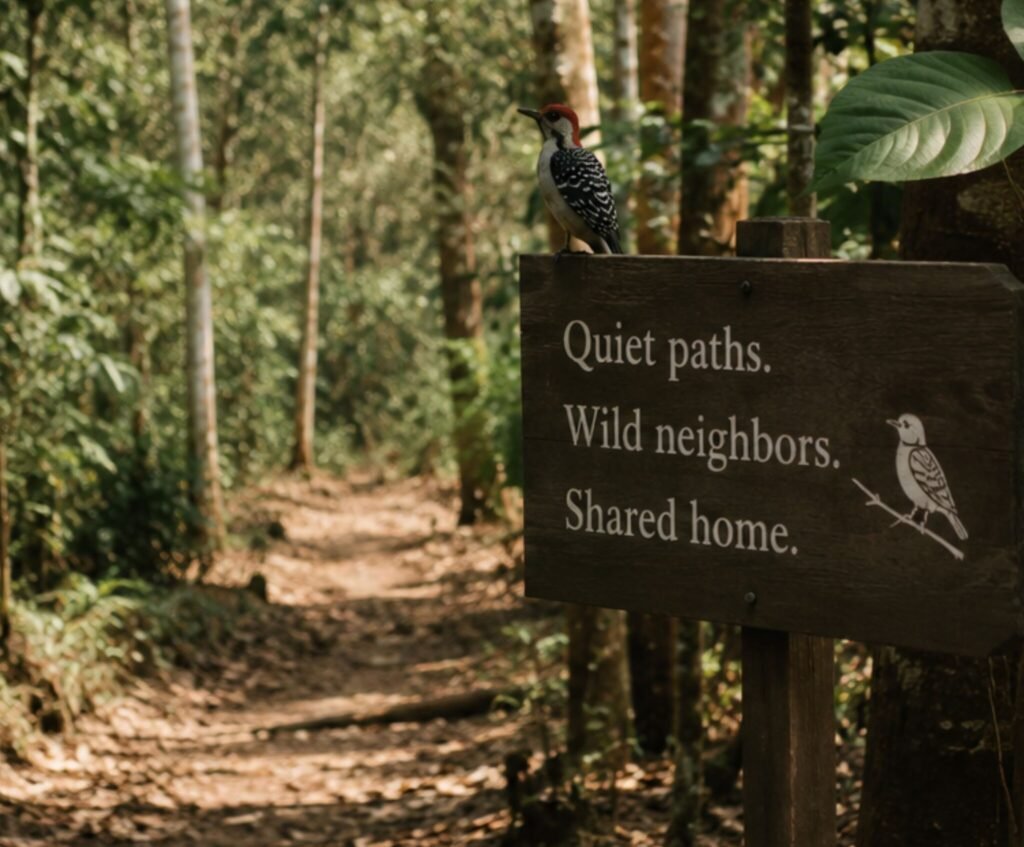
Large forests rely on smaller, connected spaces to remain viable. Villa Katipadu serves as one such connector linking patches of habitat through plantations, water bodies, and tree cover.
Birds move through this landscape freely, using it as refuge, corridor, and home. Without spaces like this, even protected forests become ecological islands.
Perhaps the most important lesson Villa Katipadu offers is that conservation does not always require separation. Here, human activity and birdlife coexist with minimal conflict because practices remain moderate and respectful.
This model is not perfect, but it is realistic and replicable. It suggests that preserving biodiversity may depend as much on everyday choices as on formal protections.
In a world driven by immediacy, Villa Katipadu rewards slowness. Birds reveal themselves over time. Patterns form across seasons. Understanding deepens with repetition.
This slowness is not passive. It is attentive. It invites observers to align with natural rhythms rather than imposing their own.
Villa Katipadu does not demand attention. It simply continues hosting birds, changing with seasons, absorbing human presence without surrendering its ecological core.
In doing so, it makes a quiet argument: that landscapes do not need to be extraordinary to matter. They need to be allowed to endure.
For those willing to watch, listen, and return, Villa Katipadu offers something rare not spectacle, but belonging.