
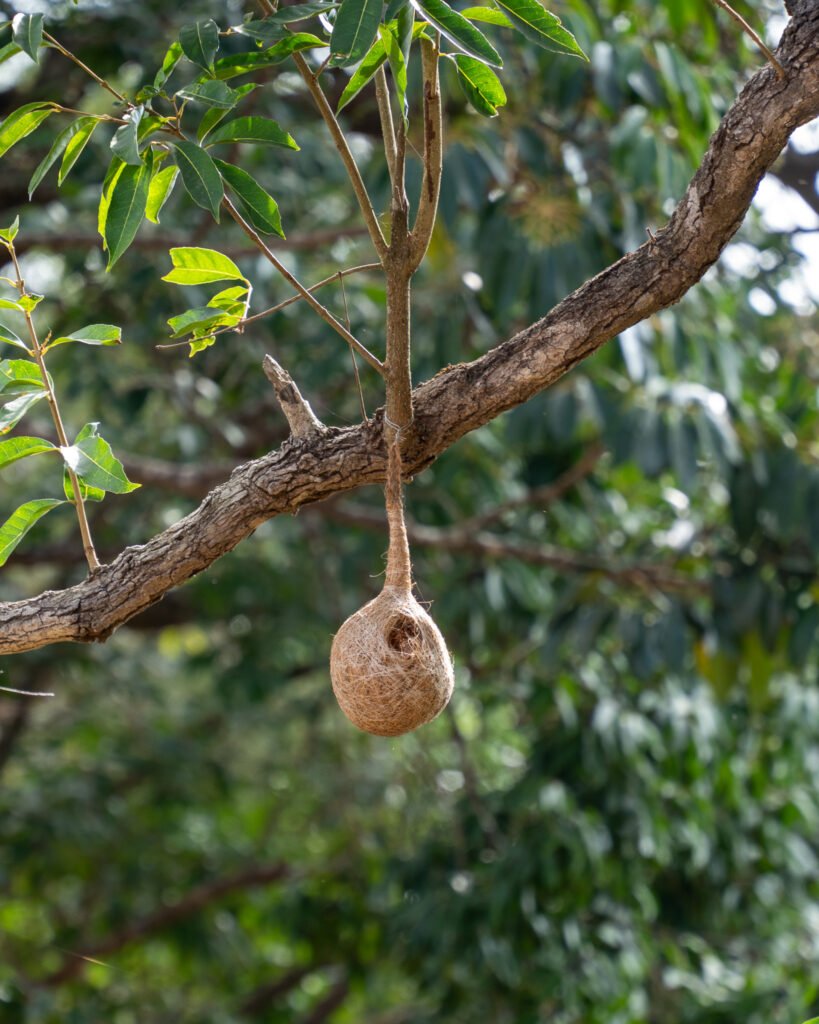
Villa Katipadu occupies a subtle yet ecologically significant niche within the broader landscape of South Coorg. Neither deep forest nor open agricultural plain, the area represents a transitional habitat where human-managed land blends into semi-natural ecosystems. Such landscapes are increasingly rare, and from an ornithological perspective, they often support a disproportionately high diversity of birdlife.
The ecological value of Villa Katipadu lies in its structural complexity. Coffee plantations shaded by native and fruiting trees, interspersed with open clearings and perennial water bodies, create a mosaic of microhabitats. This heterogeneity supports birds with varied ecological requirements arboreal insectivores, nectar feeders, frugivores, ground foragers, and aquatic specialists all find suitable niches within a relatively compact area.
Unlike protected reserves where bird activity may be concentrated along specific trails, birdlife here is diffuse and integrated into everyday surroundings. Birds are encountered not as isolated spectacles but as continuous presences calling from treetops, moving through plantation understory, or feeding along water margins. For birders, this creates an experience rooted in observation rather than pursuit.
Ecotonal regions zones where two or more habitat types intersect are known to exhibit elevated biodiversity. Villa Katipadu exemplifies this principle. Forest-edge species coexist with birds adapted to open landscapes, while water-associated birds benefit from nearby lakes and streams. Such transitions allow overlapping territories, resulting in higher species density than might be found in uniform habitats.
Shade trees within coffee plantations play a crucial role. Tall canopy species provide nesting sites and vantage points for raptors and large passerines, while mid-level foliage supports bulbuls, barbets, and flycatchers. The lower strata shrubs, leaf litter, and grasses offer feeding grounds for insectivorous and ground-dwelling birds. Each vertical layer contributes to the overall avian structure of the area.
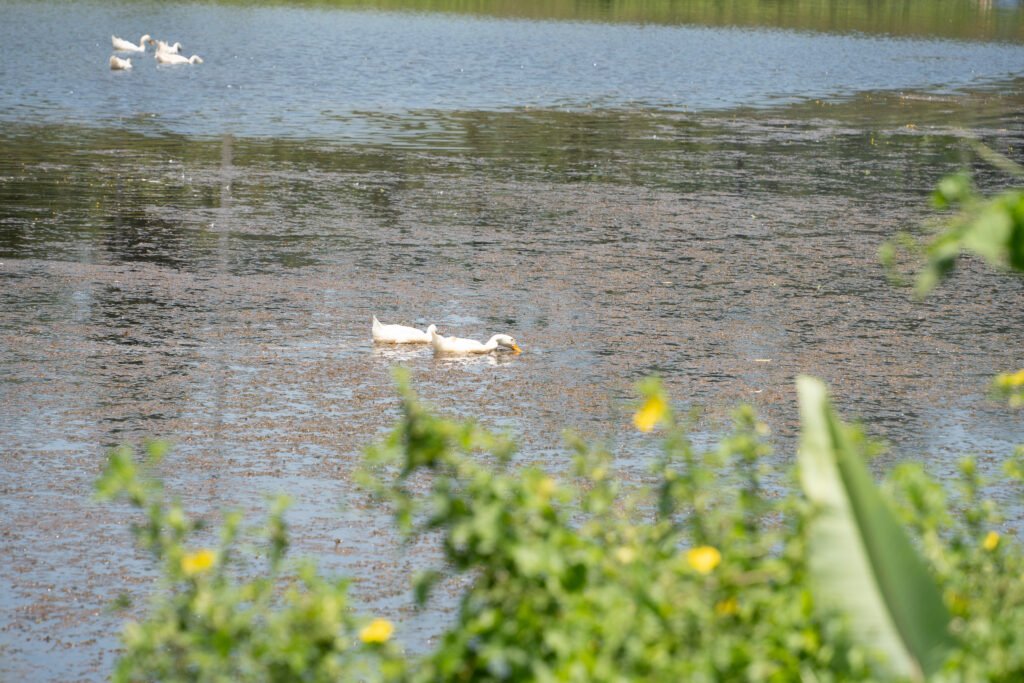
Birdlife at Villa Katipadu follows a distinct diurnal rhythm. The early morning hours are marked by intense vocal activity as birds establish territories and communicate presence. This dawn chorus is not merely aesthetic; it reflects complex social dynamics tied to breeding, competition, and environmental conditions.
As the day progresses and temperatures rise, activity shifts from vocalization to movement. Birds forage methodically, often silently, conserving energy. Afternoon hours may appear quiet to the casual observer, yet careful watching reveals subtle interactions shade-seeking behavior, interspecies spacing, and opportunistic feeding.
Evenings bring renewed motion as birds return to roosts. Aerial insectivores may be seen hunting low-flying insects, while water-associated birds gather near lakes. These transitions offer valuable observational windows for ornithologists studying behavior rather than species counts alone.
One of the defining features of Villa Katipadu’s birdlife is its relative tolerance of human activity. Birds here are neither habituated to disturbance nor excessively wary. This balance arises from low-intensity land use and predictable human behavior, which allows birds to adjust without stress.
Such tolerance enhances observational opportunities. Birds exhibit natural behaviors feeding, preening, territorial displays without abrupt flight responses. For birders and researchers alike, this results in more accurate behavioral insights compared to highly disturbed or overly protected environments.
While Villa Katipadu is not designated as a wildlife sanctuary, its ecological role is significant. Informal habitats like this act as buffers and connectors between larger forest tracts. They facilitate movement, genetic exchange, and seasonal dispersal of bird populations.
In a region facing increasing land-use pressure, the conservation value of such spaces cannot be overstated. Protecting them does not require exclusion or fencing, but rather mindful management retaining native trees, preserving water bodies, and minimizing chemical inputs.
Villa Katipadu thus represents a model of coexistence: a landscape where avian diversity thrives not despite human presence, but alongside it.