
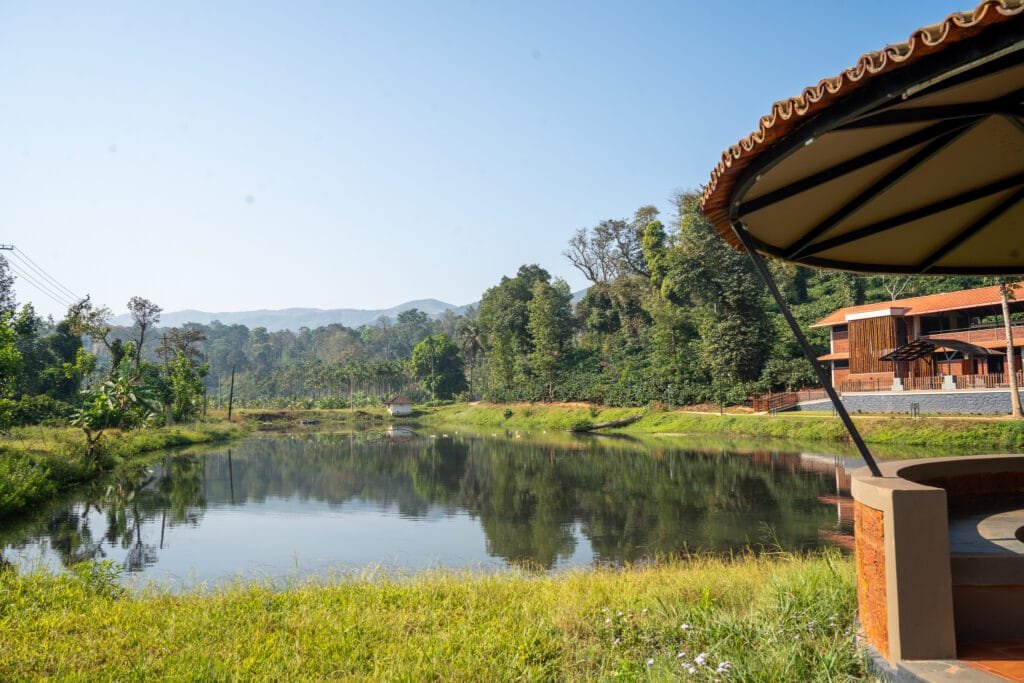
Villa Katipadu is not a destination that reveals itself all at once. Its birds, like its landscapes, unfold gradually often when one slows down enough to notice. Birding here is less about chasing species and more about walking familiar paths repeatedly, letting patterns emerge
over time.
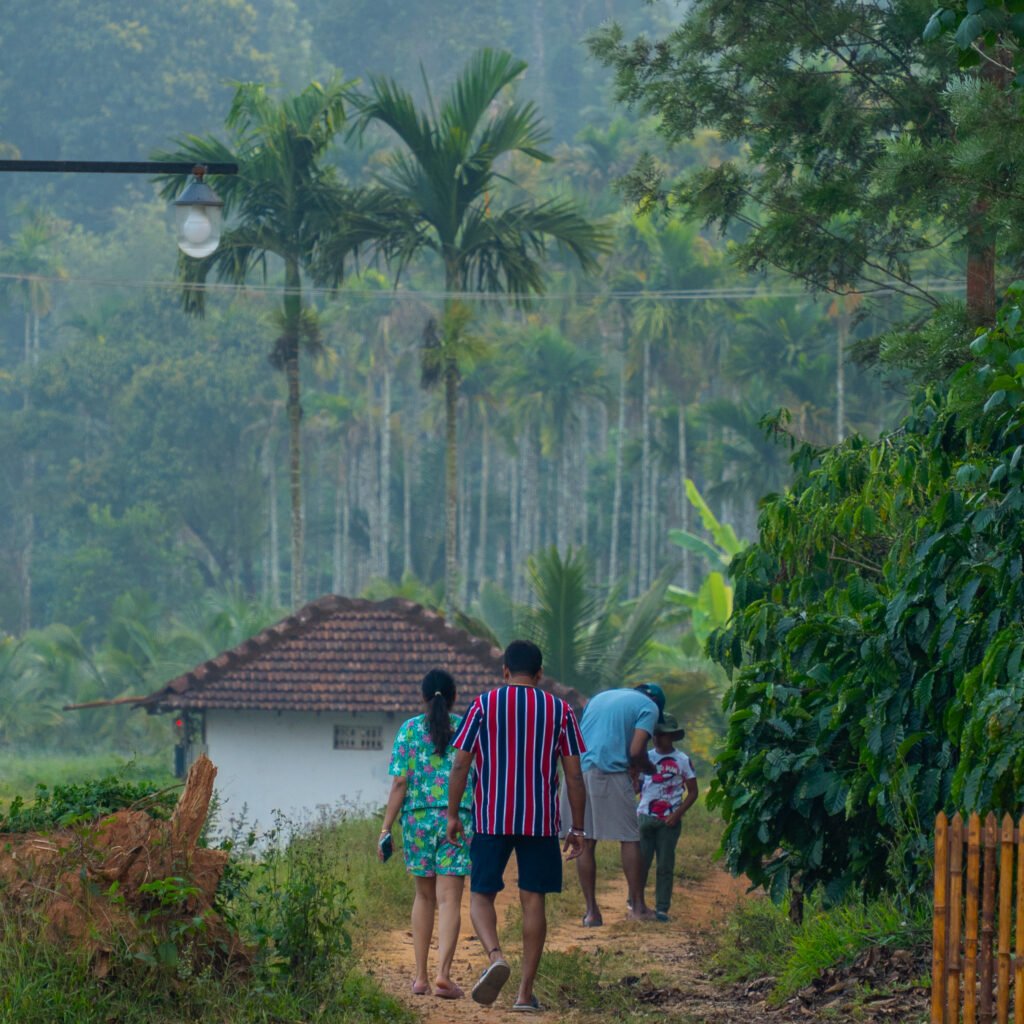
There is no single “birding trail” marked by signboards. Instead, the routes are organic: a path skirting the coffee plants, a quiet track leading toward a lake, a shaded corridor of trees where the light filters softly through leaves. These everyday routes, walked often and attentively, become the most rewarding for observing birdlife.
The coffee plantation paths are where many birders begin and where they often return. These routes may appear ordinary at first, but they offer consistency, and consistency is invaluable for observation. Birds become predictable here. A bulbul that favors a particular fruiting tree, a sunbird that returns to the same flowering shrub, a drongo that uses the same perch day after day.
Walking these paths in the early morning is especially revealing. The air is cool, movement is unhurried, and birds are actively foraging after the night’s fast. With time, one begins to recognize individual behaviors rather than just species. The landscape starts to feel less like a backdrop and more like a shared space.
The most dynamic birding often occurs at the forest edges, where plantation land gives way to denser vegetation. These transitional zones are alive with movement. Species from both open and wooded habitats overlap here, creating a sense of constant activity.
It is along these edges that one might encounter flycatchers darting between branches, nuthatches moving headfirst down trunks, or barbets calling from unseen heights. The light here is softer, filtered by overlapping foliage, and patience is rewarded. Standing still often reveals more than walking.
Edges also tell ecological stories. They show how birds adapt how some species push into human-altered landscapes while others retreat just far enough to remain comfortable.
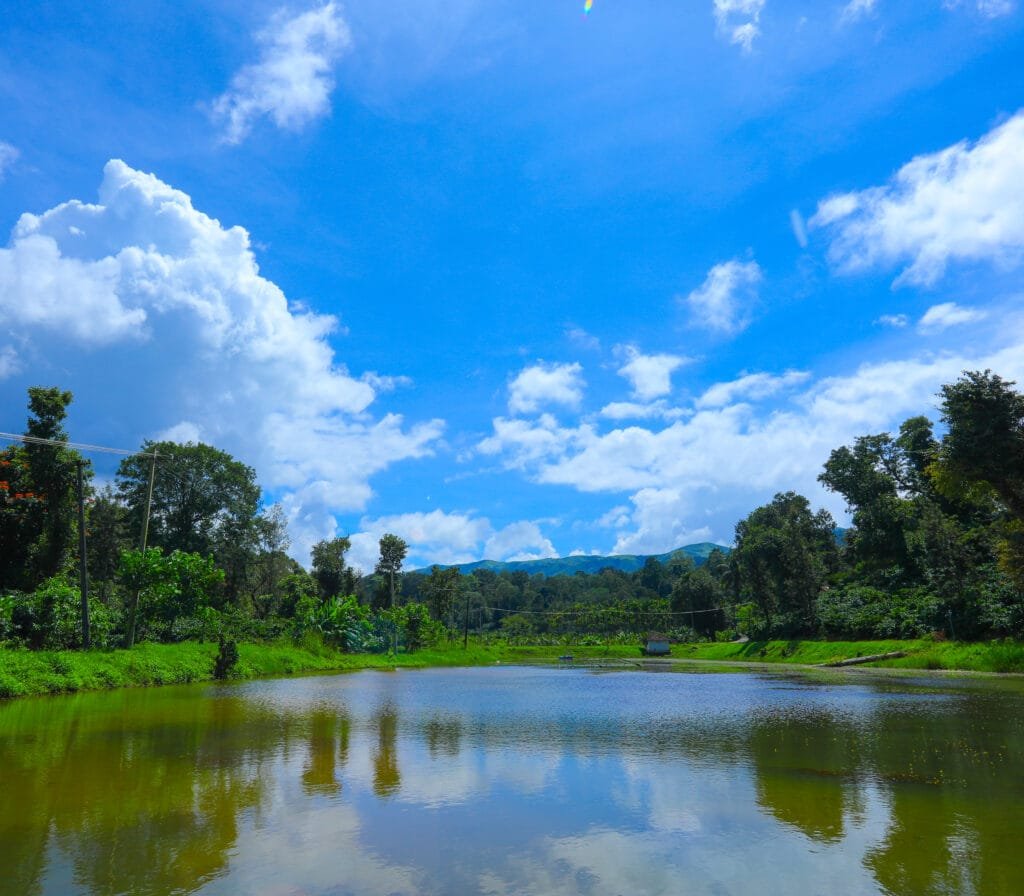
Walking toward the water changes the rhythm entirely. The pace slows. Movements become quieter. Birds near water are alert, deliberate, and precise.
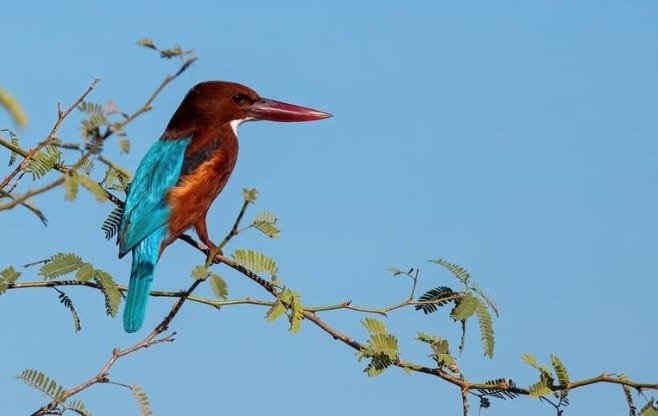
The lakes around Villa Katipadu draw a different set of observers kingfishers perched silently, herons standing motionless for long stretches, egrets moving with careful steps. Here, birding becomes an exercise in restraint. Sudden movements break the spell; stillness invites closer observation.
Spending time near water teaches an important lesson: not all birding is active. Some of the richest moments come from simply waiting.
Perhaps the most overlooked birding route is time itself. Walking the same path at different hours or seasons transforms the experience entirely. A quiet afternoon path becomes vibrant at dawn. A familiar tree hosts different birds when it flowers or fruits.
Returning again and again builds a relationship with the landscape. Birds are no longer surprises; they are expected presences, and their absence becomes as noticeable as their arrival.
In this way, Villa Katipadu encourages a form of birding rooted in familiarity, attentiveness,
and respect an approach that feels less like observation and more like companionship.
Perhaps the most overlooked birding route is time itself. Walking the same path at different hours or seasons transforms the experience entirely. A quiet afternoon path becomes vibrant at dawn. A familiar tree hosts different birds when it flowers or fruits.
Returning again and again builds a relationship with the landscape. Birds are no longer surprises; they are expected presences, and their absence becomes as noticeable as their arrival.
In this way, Villa Katipadu encourages a form of birding rooted in familiarity, attentiveness,
and respect an approach that feels less like observation and more like companionship.
Book your stay at Villa Katipadu today and enjoy a perfect mix of nature and adventure